AI connected to your data architecture
Artificial Intelligence applied to business, based on real data
From analytics to action with AI
We design and implement AI solutions that automate processes, support smarter decisions and deliver measurable business impact.

Why most AI projects fail to deliver impact
Fragmented and incomplete data
Models with no real business impact
Technical dependence and lack of scalability
Slow decision-making
Our approach: AI connected to your business
AI connected to your data architecture
Impact-driven models, not isolated experiments
Integration with real business processes and systems
Scalable deployment with Azure, Fabric and Databricks
The impact: What your business gains
Faster, more accurate decisions
Reduced operating costs and risks
Increased efficiency and productivity
Better customer and employee experiences
How do we implement AI in your company?

AI, Machine Learning and Predictive Analytics

Generative AI applied to business
Real cases of AI applied to business
AI QUERY
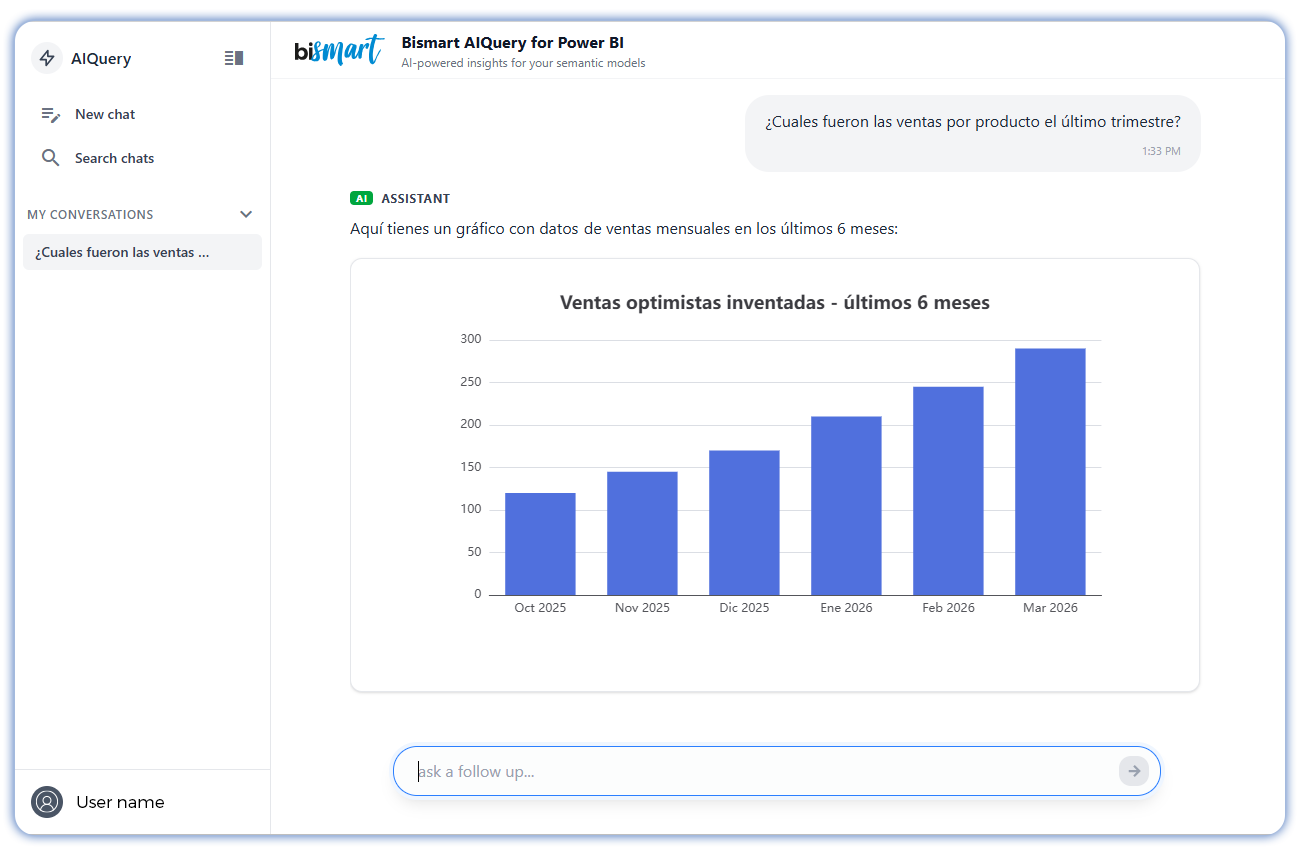
Democratizing data access with AI
Ask questions in natural language and get instant answers from your business data, with no technical expertise required.


Natural language queries
Immediate responses
Integration with all your data sources

AI with a business-first approach

Technology
We work with leading ecosystems: Azure, Microsoft Fabric, Databricks, Power BI and more.

Methodology
Proven methodology to deliver AI solutions with impact, quality and scalable over time.

Expert team
More than 100 data, analytics and AI experts with cross-industry experience and success stories.

Proprietary solutions
We have solutions and frameworks that reduce implementation time and costs.
The business impact of Artificial Intelligence

Up to 30% reduction in operating costs

+40%
operating efficiency and productivity

Real-time decisions
with actionable insights

Proven results:
more sales, higher customer satisfaction and profitability.
Ready to turn AI into business impact?
We help you identify the right AI opportunities and transform them into measurable results.
Enterprise AI: from automation to intelligent decision making
Enterprise AI is about applying artificial intelligence models, machine learning, generative AI, intelligent agents and automation to real business processes, connecting them with reliable data, scalable architecture, governance and corporate knowledge.
Enterprise AI is no longer just about automating isolated tasks or generating content. Organizations are evolving to models where artificial intelligence is actively involved in operations, analytics, customer service, technical support and decision making.
The challenge is no longer to access AI models, but to integrate them with the organization's internal data, processes and knowledge. Without business context, governance and prepared data, AI does not generate real impact.
At Bismart we help companies implement business-oriented artificial intelligence solutions: from predictive modeling and recommender systems to enterprise co-pilots, AI agents and advanced process automation.
We develop AI solutions capable of:
- query technical documentation and internal knowledge in seconds
- automate operational tasks and repetitive processes
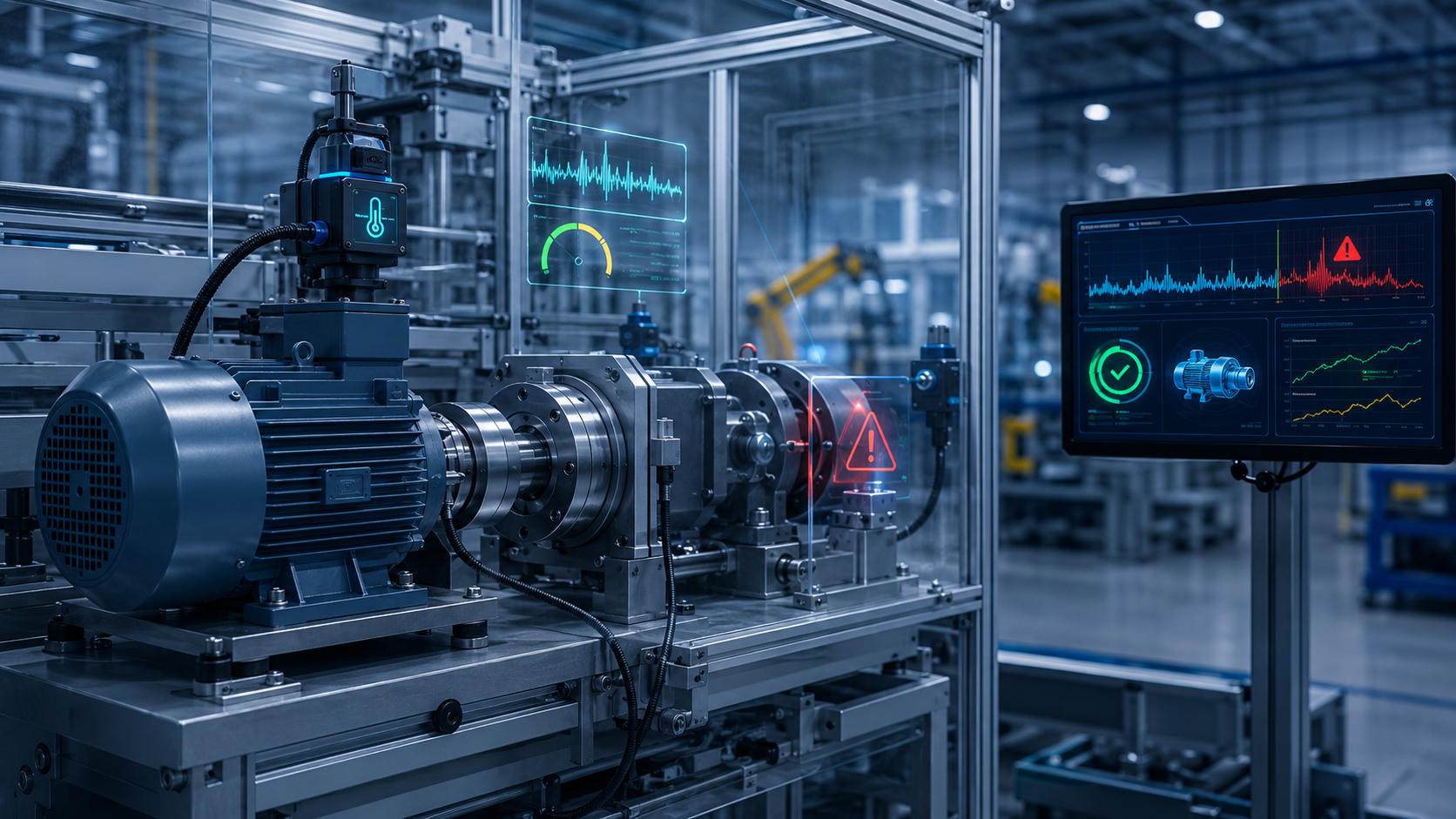
- anticipate incidents and detect anomalies
- improve forecasting and planning
- optimize decisions through intelligent data analysis
The goal is not to incorporate AI by trend, but to solve real business problems with scalable, secure and enterprise-ready solutions.
What artificial intelligence can do in a company
The application of artificial intelligence in enterprises spans multiple areas of business and operations. Some of the most common include
- process automation
- data preparation for artificial intelligence
- intelligent assistants and co-pilots
- predictive analytics
- demand forecasting
- predictive maintenance
- advanced classification and segmentation
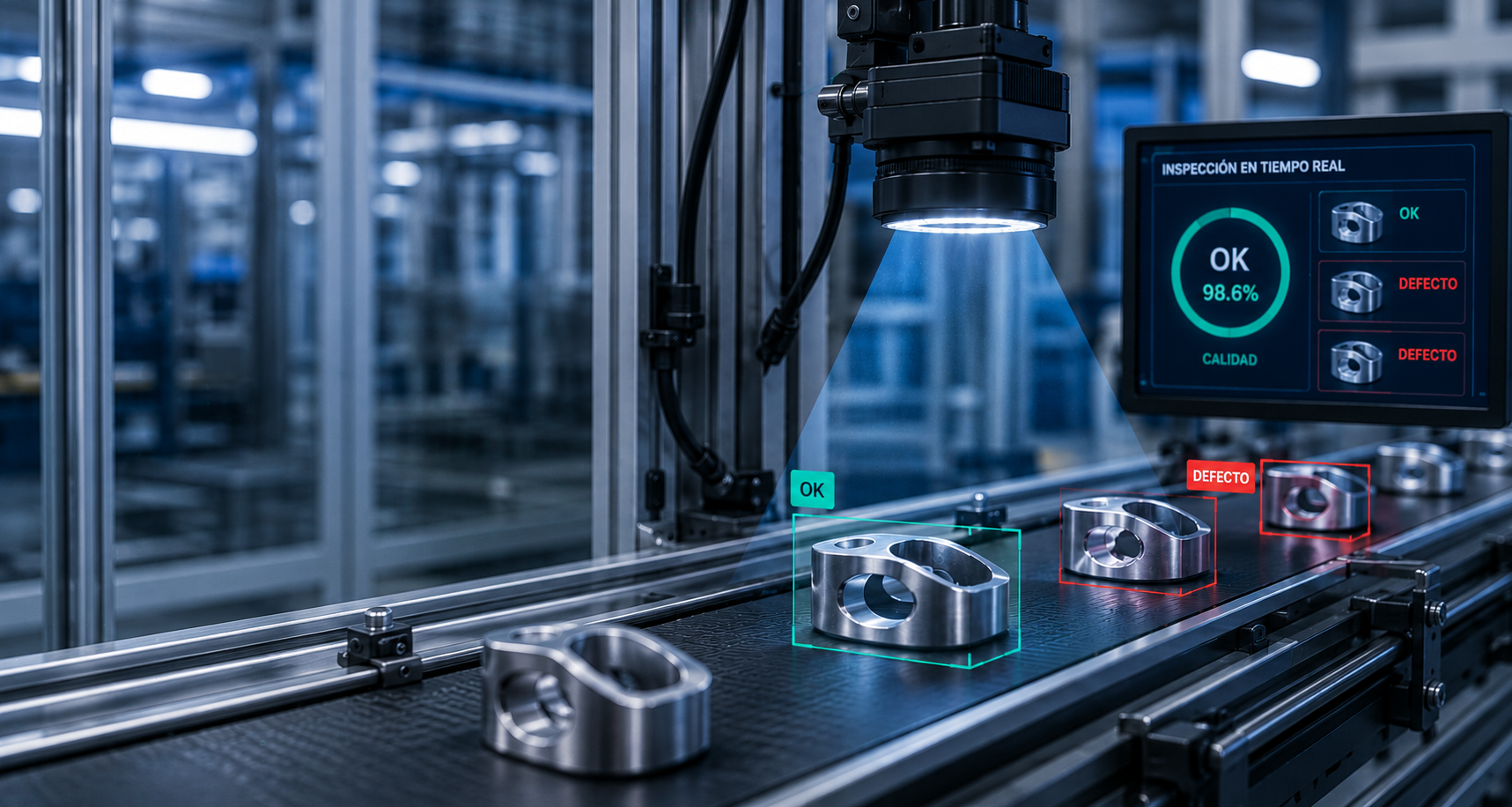
- computer vision for industrial control
- design of AI-connected data architectures
- anomaly and fraud detection
- document analysis and intelligent search
- operational and logistics optimization
The new generation of artificial intelligence based on the adoption of agents also allows systems to interact with tools, consult business information and execute actions autonomously under supervision.
How we apply artificial intelligence in enterprise environments
The adoption of artificial intelligence in enterprises requires much more than incorporating generative models or conversational assistants. To obtain real results, AI must be integrated with the organization's data, processes and systems.
At Bismart we develop business-oriented AI projects on modern data architectures and enterprise environments. We design solutions capable of querying corporate information, automating processes, analyzing large volumes of data and generating recommendations in real time.
AI solutions tailored to each organization
We develop AI solutions adapted to different business scenarios:
- intelligent assistants and corporate co-pilots
- AI agents connected to internal systems and documentation
- intelligent search based on natural language
- advanced process automation
- forecasting and predictive modeling
- predictive maintenance
- computer vision for industrial environments
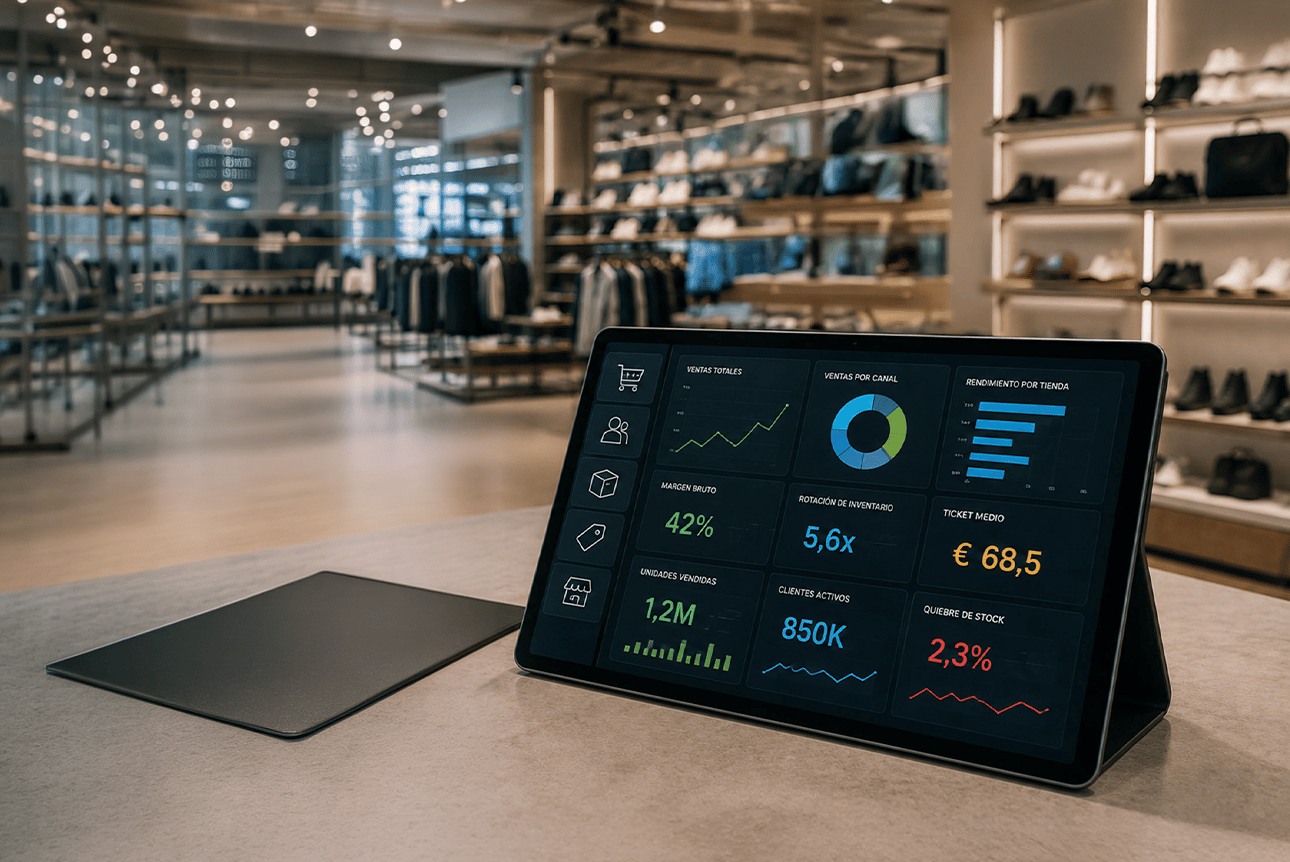
- advanced analytics and data-driven decision making
In addition, we develop our own accelerator solutions based on Microsoft technologies to facilitate the adoption of AI in complex corporate environments.
We work on cloud ecosystems and platforms such as Microsoft Fabric, Azure, Databricks or Snowflake to deploy scalable and production-ready solutions.
AI connected to data, processes and business knowledge
One of the main challenges of artificial intelligence in enterprises is not the model, but reliable access to information. Many organizations have large volumes of data, but fragmented across disconnected systems, documents, applications and processes.
Therefore, much of the success of an AI strategy depends on:
- data quality and readiness
- cross-platform integration
- information governance
- the ability to contextualize business knowledge
- and the availability of AI-ready architectures.
At Bismart we help build that technological and organizational foundation so that AI can operate on reliable, secure and business-useful information.

FAQs
AI for business
What does a company need before implementing AI?
Before implementing AI, a company needs to identify use cases with real impact, assess the quality and availability of its data, review its technological architecture and define security, governance and adoption criteria. Artificial intelligence does not work in isolation: it needs reliable data, clear processes and concrete business objectives.
It is also important to determine which type of AI fits each need: machine learning, generative AI, intelligent agents, automation, document processing, predictive analytics or other solutions. Companies that prepare their data, processes and governance model well are more likely to scale AI beyond experimental pilots.
What types of AI solutions does Bismart develop?
Bismart develops AI solutions for enterprises to improve processes, accelerate decisions and turn corporate data into operational value. These include machine learning solutions, predictive analytics, generative AI, conversational assistants, AI agents, intelligent automation, natural language processing, document analytics and enterprise data modeling.
Bismart's approach starts from a key premise: AI must be connected to data architecture, data governance and real business processes. Therefore, each solution is designed taking into account data quality, technological scalability, security and the expected impact on the organization.
What is the difference between generative AI, machine learning and AI agents?
Machine learning allows the creation of models that learn from data to make predictions, classify information, detect patterns or automate decisions. Generative AI focuses on creating content, answers, summaries, code, images or text from models trained on large volumes of information. AI agents go one step further: they can interpret an instruction, plan actions, query tools and execute tasks with a certain degree of autonomy.

In a company, these technologies are often complementary. Machine learning can anticipate demand or risk; generative AI can facilitate access to corporate knowledge; and AI agents can automate workflows connected to internal systems, data and processes.
How does AI connect to an enterprise data platform?
AI connects to an enterprise data platform through pipelines, models, APIs, semantic layers, governance systems and consumer environments that enable models to access reliable, up-to-date and contextualized data. The data platform acts as the foundation that powers, controls and scales artificial intelligence use cases.
This connection is critical because AI models need integrated, traceable and secure data. A modern platform allows you to prepare data, apply quality rules, control access, document sources and connect AI results to dashboards, applications, operational processes or intelligent assistants.
How to identify AI use cases with real impact?
To identify AI use cases with real impact, a company must start with concrete business problems, not the technology. The best cases are usually linked to repetitive decisions, data-intensive processes, manual tasks, complex forecasting, document analysis, customer service, operational efficiency, risk, sales or planning.
Then, three factors need to be evaluated: data availability, technical feasibility and economic or operational impact. An AI use case is prioritized when it solves a relevant problem, can be fed with sufficient data and has a measurable benefit to the organization. This evaluation avoids investing in pilots that are attractive but difficult to scale or poorly connected to business objectives.