Enterprise Data Governance 

Advanced Data Governance:
from Compliance to Trust

The proliferation of platforms, artificial intelligence and distributed architectures is redefining data governance.

Organizations need governance models that ensure traceability, context and control across increasingly complex data environments. .


Data Governance Is Evolving

Icon_Regulatory impulse

Regulatory momentum

New data protection laws and increasingly stringent global compliance frameworks.

Icon_Operational Risks

Operational and economic risks

Poor quality, lack of traceability and information silos generate risk, inefficiencies and losses.

Icono_IA and automation

AI and automation

AI is only reliable if it is based on governed, consistent and contextualized data.

world asia 2

Global Perspective

The regulatory and technological environment is converging towards stricter and more sophisticated governance.

+120
countries with data protection laws

+60%
of organizations will increase their investment in data governance (2025-2027 )

AI Act
European AI Regulation: transparency, traceability and data management

Growing
complexity due to multi-cloud environments, unstructured data and third parties

Trends in Data Governance

Bismart_Data management

Adaptive Governance
(Data Governance 2.0)

Automation by design, dynamic policies and risk detection based on machine learning.

Bismart_End-to-end

Data lineage
end-to-end

Complete data traceability: from its origin to its consumption, to ensure context and trust.

Bismart_Ojo cubo

Data observability

Continuous monitoring of data quality, availability and usage throughout the organization.

Bismart_Fold

Intelligent data catalogs

Rich metadata and semantic search to discover, understand and reuse data with confidence.

Bismart_Structure

Synthetic data

Facilitate development, testing and analytics while preserving privacy and reducing risk.

Bismart_Protection

Metadata-based governance

Policies, rules and controls automatically applied based on the context of the data.

The Bismart Approach

Operational Data Governance for Modern Environments

We combine strategy, technology and automation to implement data governance models that ensure trust, compliance and value.

Bismart_Unit
Bismart_Data base connection
Bismart_Cloud connection
Bismart_Data display

Proprietary governance products

Accelerators for catalog, metadata, lineage and data quality.

Master data models and metadata

Consistent single entities, business rules and corporate glossary.

Cloud platforms (Azure & Fabric)

Scalable, secure and AI-ready architectures.

Automation and monitoring

Continuous control of quality, risk, compliance and data usage.

Why Bismart?

Bismart_Professional Services

Specialized experience

+15 years designing and implementing data governance models in leading organizations.

Bismart_Major efficiency

Strategic technology alliances

Microsoft Solutions Partner (Data & AI) and Databricks Consulting Partner.

Bismart_Evolution

High-impact projects

+1,200 projects carried out in key sectors with measurable results.

Bismart_Security check

Governance that enables AI

We prepare your data for advanced analytics and artificial intelligence.

Microsoft 2013 Business Intelligence Certification
Microsoft 2015 Business Intelligence Certification
Microsoft 2016 Data Analytics Award Certification
Microsoft Data & AI Certification - Azure - Specialist Analytics
Databricks Consulting Partner Logo

Success Stories

Document management and data analysis system for multinational insurance company

Data control and traceability

Centralized governance model in Databricks with Unity Catalog to control access, permissions and data usage at scale.

Results:
↓ -45% incidences of access and permissions
↑ Traceability and data quality
.

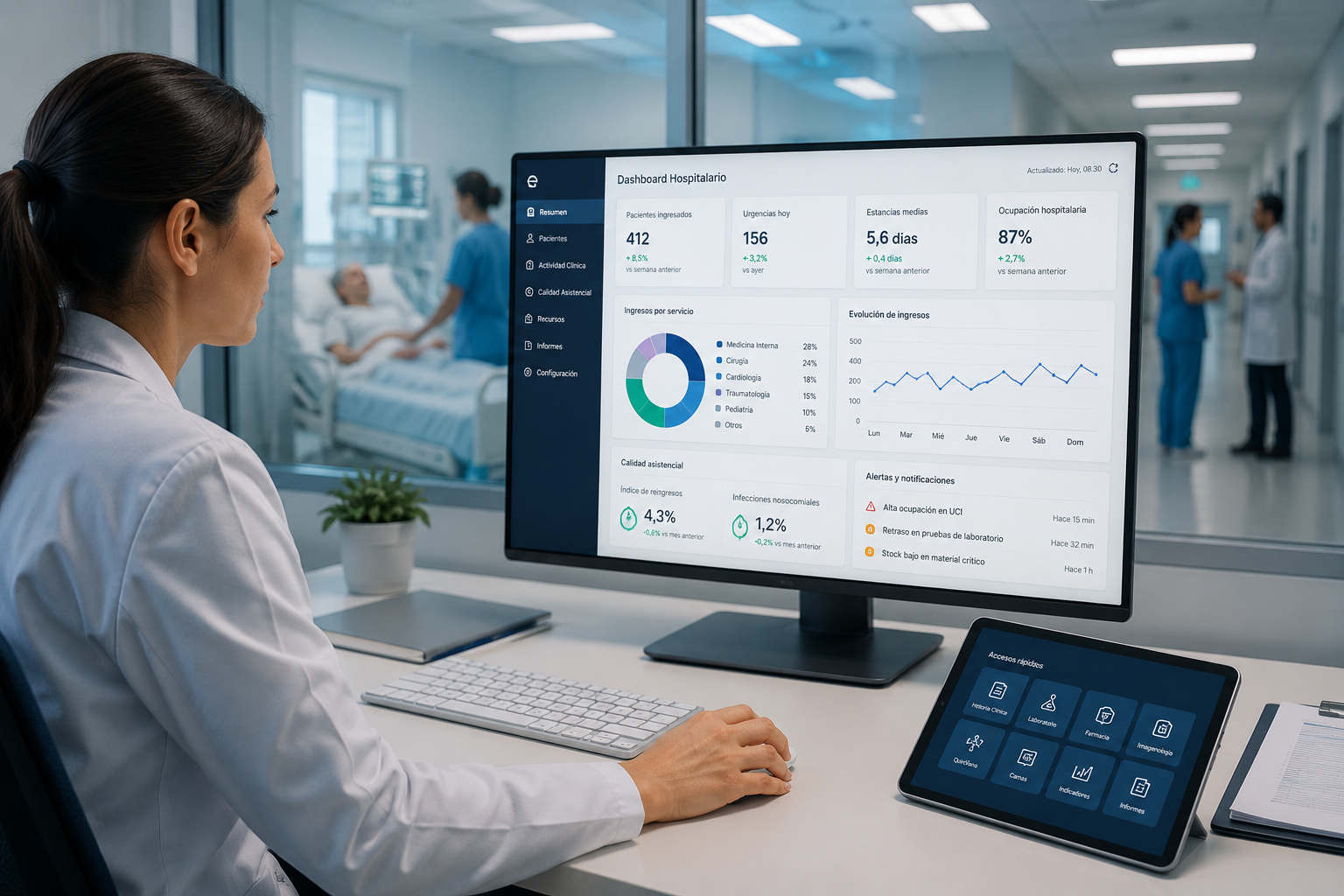
Healthcare professional using a hospital dashboard for real-time clinical data analysis and operational management

Centralization of clinical data

Integration of hospital information to accelerate access to clinical data and improve care analysis.

Results:
↑ +60% faster access to information
↑ Unified view of patients and operations.

success-case-government-databricks

Confidence in data

A modern data architecture automates information ingestion, transformation and validation.

Results:
↑ more reliable data.
↓ -95% errors in the data.

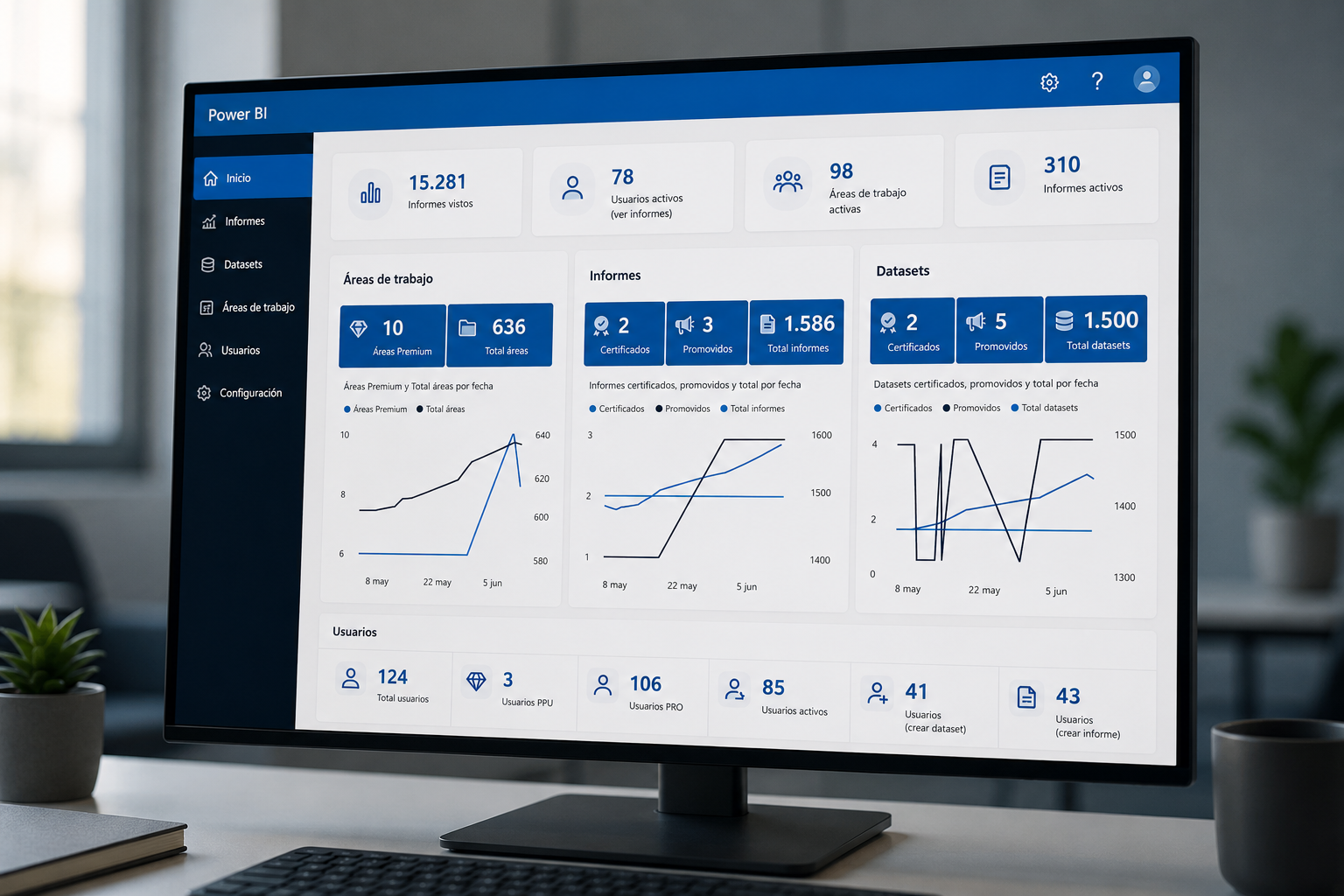
Power BI Analytics Dashboard on an office screen to visualize activity, reports, users and datasets in a governed BI environment.

Power BI Governance

Scaling of a corporate Power BI environment with a common, centralized governance model.

Results:
↑ +60% management acceleration.
↑ confidence in the data

Turn data governance into a competitive advantage.

We help you design and implement a data governance model adapted to your organization and the challenges of tomorrow.

Data Governance for Enterprises That Need Trust, Control and Scalability

Data governance is the set of policies, roles, processes, standards and tools that ensure that an organization's data is reliable, secure, traceable, accessible and useful for decision making, compliance and artificial intelligence.

At Bismart , weapproach data governance as an operational capability: we define accountability, quality, metadata, lineage, catalogs and automation models so organizations can scale BI, advanced analytics and AI with confidence.

Data governance has become a critical capability for any organization that wants to make reliable decisions, comply with regulation, and move toward advanced analytics and AI models. It is not just about documenting data or defining internal standards. A robust data governance model makes it possible to establish who is responsible for each information asset, how its quality is guaranteed, what rules govern its use, what traceability exists from source to consumption, and how to ensure that data is consistent across the organization.

In companies with multiple systems, business areas, countries, operating units or cloud platforms, data governance is no longer a technical initiative but a condition for business efficiency. Without a clear data governance strategy, teams spend too much time validating information, resolving discrepancies, interpreting conflicting indicators or locating the right data. The result is often an organization with a lot of information available, but little real confidence in its data.

An enterprise data governance model helps to sort out this scenario. It defines policies, processes, roles and tools to make data accessible, secure, traceable and useful. It also helps connect data management to specific business objectives: reducing operational risks, improving the quality of reporting, accelerating access to critical information, facilitating regulatory compliance, and preparing the organization to scale artificial intelligence use cases.

Why implement a data governance model?

Implementing a data governance model makes it possible to transform corporate information into a managed asset, not a dispersed resource. This involves working on dimensions such as data quality, metadata, lineage, cataloging, master data, security, access permissions and the common definition of indicators, metrics and business concepts.

The difference between a data-driven enterprise and a truly data-driven enterprise lies in trust. If each department handles different definitions, if reports do not match, if there is no traceability or if users do not know which source is valid, decision making becomes slow and vulnerable. Data governance provides the necessary framework for business, technology, compliance and analytics to work on a common basis.

In addition, the advent of artificial intelligence has raised the bar. AI models need governed, contextualized and controlled data. An organization that does not know the origin, meaning, quality and permissions of its data will hardly be able to deploy artificial intelligence in a secure, explainable and scalable way. That is why data governance is an essential part of any AI readiness strategy.

Data governance consulting: from strategy to operation

A data governance consultancy must help the organization move from intent to execution. The starting point is not the tool, but the operating model: what data is critical, who governs it, what rules it must comply with, how its quality is measured, what processes must be automated, and what technology platform enables governance to be sustained at scale.

At Bismart we implement data governance from a holistic perspective, combining strategy, technology and operation. We help to define governance models adapted to the reality of each organization, to structure roles and responsibilities, to design data catalogs and metadata models, to improve the quality and traceability of information and to integrate governance within modern platforms such as Azure, Microsoft Fabric, Power BI or Databricks.

The goal is not to add complexity, but to reduce it. A good data governance model should facilitate the work of teams, accelerate access to reliable data and turn governance into a continuous operational capability. When data governance is designed correctly, the enterprise gains control without stifling innovation: it can deliver better, decide better and scale its analytics and artificial intelligence initiatives with greater certainty.

Data governance, quality and artificial intelligence

Data quality, lineage, metadata and security are essential components of any data governance strategy. Without them, organizations can build dashboards, platforms or AI models on an unreliable foundation. With them, data acquires context, traceability and business value.

Therefore, data governance should no longer be understood as an isolated compliance project, but as a structural capability to compete in data-driven environments. Companies that govern their data well are better prepared to automate processes, feed artificial intelligence models, respond to regulatory requirements, reduce incidents and build a culture of decision making based on reliable information.

At Bismart we help organizations design and implement data governance models prepared for today's challenges: distributed architectures, multi-cloud environments, advanced analytics, artificial intelligence, regulatory compliance and the growing need for trust in corporate information. Because governing data is not just about controlling it; it is about turning it into a solid foundation for growth, innovation and secure decision-making.


Data Governance

What is data governance?

Data governance is the set of policies, processes, roles, standards and tools that ensure that an organization's data is reliable, secure, traceable, accessible and useful for decision making.

In a company, data governance defines who is responsible for each piece of data, how its quality is validated, what rules govern its use, how access is controlled and how regulatory compliance is ensured. Its goal is not only to organize information, but to turn data into a reliable corporate asset for analytics, artificial intelligence, reporting and business processes.

What is the difference between data governance and data management?

Data management is a broad concept that encompasses all the capabilities required to capture, integrate, store, transform, protect and exploit an organization's data. Data governance is an essential part of data management and focuses on defining rules, responsibilities, controls and trust criteria.

Simply put: data management ensures that data can flow and be used correctly; data governance ensures that this use is reliable, secure, consistent and aligned with business objectives. In companies with multiple systems, areas and sources of information, both approaches must work in coordination.

What roles are involved in a data governance model?

A data governance model usually involves different business, technology and compliance profiles. Among the most common roles are data owners, who are responsible for data from a business perspective; data stewards, who oversee data quality, definition and use; and IT or data management teams, who enable the necessary infrastructure, security and integration.

Compliance, privacy, security, analytics, artificial intelligence and executive management may also be involved. In a mature model, data governance does not depend only on the technology area: it requires shared responsibility between business, data and technology.

How are data governance, quality, metadata and lineage related?

Data governance establishes rules and responsibilities; data quality measures whether data is correct, complete, consistent and up-to-date; metadata explains what each piece of data means, where it comes from and how it should be used; and data lineage provides insight into the data's journey from its origin to its final consumption.

These capabilities are closely connected. Without metadata, it is difficult to interpret data correctly. Without lineage, it is not possible to audit transformations or detect the source of errors. Without quality, decisions become unreliable. Data governance integrates all these pieces so that the organization can trust its data at scale.

Why is data governance key to AI?

Data governance is key to artificial intelligence because AI models depend directly on the quality, traceability, security and context of the data they are trained on or fed. If the data is incomplete, inconsistent, biased or poorly governed, AI results can be erroneous, difficult to explain or even generate operational and regulatory risks.

A robust data governance model allows control over what data is used, who can access it, how it is documented, what level of quality it is, and how compliance is ensured. That's why organizations that want to scale AI securely need to govern their data before automating critical decisions or processes.